
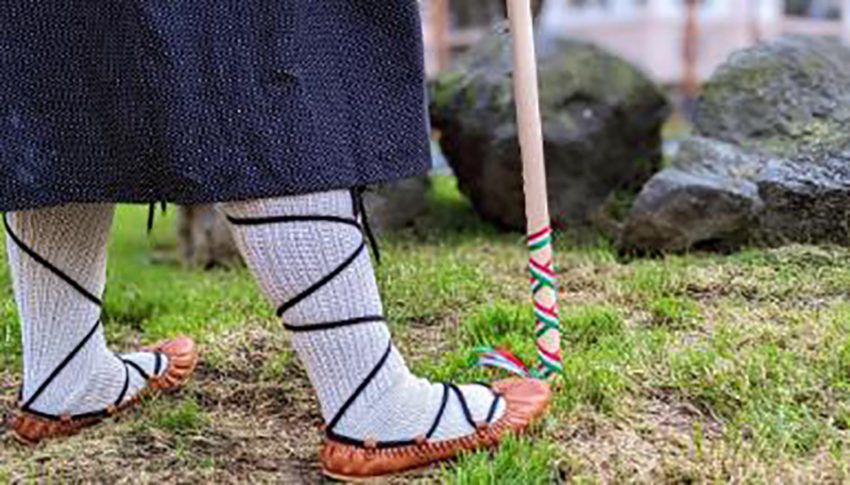
Santa Agueda (Agate Deuna, in Basque) is a deep-rooted tradition in the Basque Country that is celebrated every February 4, the eve of this blessed woman. (Autor: Irati Olazabal)
Santa Agueda (Agate Deuna, in Basque) is a deep-rooted tradition in the Basque Country that is celebrated every February 4, the eve of Santa Agueda. The «cuadrillas» (groups of friends) take to the streets to sing the songs of the day, dressed in «baserritarrak» (typical rural clothing) and with the «makila» (wooden stick) in hand, marking the rhythm and raising money for a charitable cause.
Formerly, this was a tradition of single men who were going to do their ‘military service’ that year; they would join together to go out and sing along the streets, or from farmhouse to farmhouse asking for money that they would then use for various purposes. This tradition is still maintained in different ways: For example, in the town of Altsasu (Navarra), the protagonists of the day are young people who come of age that same year. This collection of money is maintained in the capital of the Basque territory, Vitoria-Gasteiz, where everyone who participates gets a gift.
In addition, in some municipalities of Bizkaia, Barakaldo and the area of Arratia among others, there are Hermitages (small churches) in honor of this Saint. Therefore, in these places the tradition is of great importance for the citizenship and has a lot of strength. In Zornotza (Bizkaia) they have their traditional costume for the specific celebration of this day. In addition, in this historical territory there are two different coplas (songs that are performed with or without accompanying musical instruments and usually contain simple stories with morals and funny anecdotes, or simply amusements), both of which are sung. On the one hand, the traditional one entitled «Santa Agueda» and, on the other hand, the less popular one entitled «Zoriona ta bakea».
Emphasizing the coplas, there are different versions of the song «Santa Agueda». The big differences are between regions, since there are different «euskalki» (dialects of Basque that are mainly differentiated between regions but also, in certain regions, are differentiated by towns), but also the copla can be different in certain towns.
In the territories of Iparralde (north part of Euskal Herria in France), as a consequence of the civil war in Spain and the second world war afterwards, this tradition lost popularity but in these last years it has resurged in localities like Hendaye, Bayonne or San Juan de Luz, where the coplas have returned to take the streets and rural neighborhoods. Also in the municipality of Cáseda, in Navarra, not only the Saint is sung; there they also ring the bells, there are processions, fireworks are launched and musical pilgrimages (popular concerts) are organized.
As in other Basque festivities, it is curious how on this day Christian and pagan traditions come together: On the one hand, as its own name indicates, the tradition is celebrated in honor of Saint Agueda, a Sicilian virgin and martyr of the 3rd century who was condemned to have her breasts cut off for rejecting the tyrant ‘Quinciano’ and, on the other hand, the blows given to the rhythm of the music with the makila on the ground, serve to awaken the earth and indicate that Winter must end, hoping that Spring will begin to bear fruit as soon as possible. Also with this ritual, Tradition and Science seem to unite, since it is objectively demonstrated that a few weeks later, Spring arrives in Euskal Herria thanks to these beautiful customs, jokes a group of scientists from the University of the Basque Country (EHU-UPV) who this year have been encouraged to sing in the streets of Bilbao.
Santa Agueda, ¿una tradición vasca que une la costumbre con la ciencia?
Santa Águeda (Agate Deuna, en euskera) es una tradición de fuerte arraigo en Euskal Herria que se celebra cada 4 de febrero, la víspera de la festividad de esta beata siciliana
En este día, las cuadrillas (grupos de personas amigas) salen a la calle para entonar los canciones propias del día, vestidas de ‘baserritarrak’ (indumentaria típica rural) y con la ‘makila’ (bastón de madera) en la mano, marcando el ritmo y recaudando dinero para alguna causa benéfica.
Antiguamente, ésta era tradición de hombres solteros que ese mismo año debería realizar el ‘servicio militar’; se unían para salir a cantar recorriendo las calles, o de caserío en caserío pidiendo dinero que luego empleaban para cuestiones diversas. La tradición se sigue manteniendo de diferentes formas: Por ejemplo, en el pueblo de Altsasu (Navarra), son protagonistas del día jóvenes que cumplen la mayoría de edad ese mismo año. Esa recaudación de dinero se mantiene en la capital del territorio vasco, Vitoria-Gasteiz, donde todas las personas que participan obtienen además un regalo.
En Barakaldo y algunos municipios tambie´n vizcaínos en la zona de Arratia, entre otras, existen Ermitas (pequeñas iglesias) en honor a esta Santa. Por ello, en estos lugares la tradición es de gran importancia para la ciudadanía y tiene mucha fuerza. Sin salir de Bizkaia, en Zornotza tienen su traje tradicional para la específica celebración de este día. Además, en este territorio histórico existen dos coplas distintas y se cantan ambas. Por un lado, la tradicional titulada “Santa Agueda” y, por otro, la titulada “Zoriona ta bakea”.
Haciendo hincapié en las coplas, existen diferentes versiones de la canción “Santa Agueda”. Las diferencias se encuentran entre regiones, puesto que hay diversos “euskalki” (dialectos del euskera en cada territorio pero también, en determinadas regiones se diferencian por pueblos).
En los territorios de Iparralde (Sur de Francia), como consecuencia de la guerra civil en España y la segunda guerra mundial después, esta tradición perdió popularidad pero en estos últimos años ha resurgido en localidades como Hendaia, Baiona o San Juan de Luz, donde las coplas han vuelto a tomar las calles y zonas rurales. También en Cáseda, municipio de Navarra, no solo se canta a la Santa; allí también suenan las campanas, hay procesiones, lanzan cohetes y se organizan romerías musicales (conciertos populares).
Al igual que en otras festividades vascas, resulta curioso cómo este día se unen tradición cristiana y pagana: Por un lado, como su propio nombre indica, la tradición se celebra en honor a la Santa Agueda, virgen y mártir siciliana del siglo III que fue condenada a que le cortaran los pechos por rechazar al tirano ‘Quinciano’; y de otra parte, los golpes que se dan contra el suelo al ritmo de la música con la makila, sirven para despertar a la tierra e indicarle que el Invierno debe finalizar, esperando que la Primavera comience a dar sus frutos cuanto antes.
Y también con este ritual, Tradición y Ciencia parecen unirse, pues queda objetivamente demostrado que pocas semanas después, la Primavera llega a Euskal Herria gracias a estas bonitas costumbres, bromean en un grupo de personas científicas de la Universidad del País Vasco (EHU-UPV), que este año se han animado a cantar por las calles de Bilbao.

Santa Ageda, ohitura eta zientzia batzen dituen euskal tradizioa?
Santa Ageda otsailaren 4an, Santa Ageda bezperan, Euskal Herrian oso errotuta dagoen tradizioa da.
Santa Ageda otsailaren 4an, Santa Ageda bezperan, Euskal Herrian oso errotuta dagoen tradizioa da. Koadrilak kalera ateratzen dira eguneko kantak abestera, baserritarrez jantzita eta makila eskuan dutela, erritmoa markatuz eta ongintzazko arrazoiren baterako dirua bilduz.
Antzina, urte horretan soldaduzka egin behar zuten gizon ezkongabeen tradizioa zen; kalez kale edo baserriz baserri ibiltzen ziren kantuz, gero hainbat gauzatarako erabiltzen zuten dirua eskatuz. Ohitura hori hainbat modutara mantentzen da: Adibidez, Altsasuko herrian (Nafarroa), urte horretan bertan adin nagusitasuna betetzen duten gazteak dira eguneko protagonistak. Diru-bilketa hori euskal lurraldeko hiriburuan mantentzen da, Gasteizen, non parte hartzen duten pertsona guztiek opari bat lortzen duten.
Gainera, Bizkaiko, Barakaldoko eta Arratiako zenbait udalerritan, besteak beste, ermita txikiak daude Santa honen omenez. Horregatik, leku horietan tradizioa oso garrantzitsua da herritarrentzat, eta indar handia du. Zornotzan (Bizkaia) dute egun hori ospatzeko jantzi tradizionala. Gainera, lurralde historiko honetan bi kopla ezberdin daude eta biak abesten dira. Alde batetik, Santa Ageda izeneko tradiziozkoa eta, bestetik, Zoriona ta bakea.
Koplak azpimarratuz, «Santa Agueda» abestiaren bertsio ezberdinak daude. Aldeak handiak dira eskualdeen artean, euskalki desberdinak baitaude (nagusiki eskualdeen artean bereizten diren euskalkiak, baina eskualde jakin batzuetan herrien arabera ere bereizten direnak), baina kopla ere desberdina izan daiteke herri jakin batzuetan.
Iparraldeko lurraldeetan, Espainiako gerra zibilaren eta bigarren mundu gerraren ondorioz, tradizio horrek ospea galdu zuen, baina azken urteotan berpiztu egin da Hendaian, Baionan eta Donibane Lohizunen, besteak beste, non koplek berriro hartu dituzten landa eremuko kale eta auzoak. Kasedan ere, Nafarroan, ez zaio Santuari bakarrik kantatzen; han ere kanpaiak entzuten dira, prozesioak daude, suziriak botatzen dira eta erromeria musikalak antolatzen dira (kontzertu herrikoiak).
Beste euskal jai batzuetan bezala, bitxia da egun honek tradizio kristaua eta paganoa nola batzen dituen: alde batetik, izenak berak dioen bezala, tradizioa Santa Agedaren omenez ospatzen da, III. mendeko birjina eta martiri siziliarra, Quinciano tiranoa arbuiatzeagatik bularrak moztera kondenatua izan zena ‘eta, bestetik, musikaren erritmoari makila lurrean jarrita ematen zaizkion kolpeek lurra esnatzeko eta Negua amaitu behar dela adierazteko balio dute, Udaberria lehenbailehen fruituak ematen hasiko delakoan.
Erritual horrekin ere, badirudi Tradizioa eta Zientzia bat datozela, objektiboki frogatuta geratzen baita aste gutxi batzuk geroago, Udaberria Euskal Herrira ohitura polit horiei esker iristen dela. Txantxetan ari dira aurten Bilboko kaleetan kantatzera animatu diren Euskal Herriko Unibertsitateko (EHU) zientzialari talde batean.
Santa Agueda, une basque tradition qui joint les gens à leur Terre.
Santa Águeda (Agate Deuna, en basque) est une tradition profondément enracinée au Pays Basque qui est célébrée chaque 4 de février, la veille de la fête de ce bienheureux sicilien.
En ce jour, le “cuadrillas” (groups de amies) sortent dans la rue afin de mettre le ton aux chansons propre du jour, dressée de “baserritarrak” (costume rural typique) et avec la “makila” (canne de bois) à portée de main, en marquant le rythme et récolter de l’argent pour quelque cause bénéfique.
Autrefois, cette tradition des garçons célibataires que cette année-là devrait réaliser le service militaire, ils se rejoignirent pour sortir à chanter en traversant les rues, ou de hameau en hameau en demandant de l’argent qu’après il était utilisé pour de différentes questions. La tradition est maintenue de différentes façons: par exemple, dans le village de Altsasu (Navarra) ce sont les protagonistes du jour, les jeunes qui fêtent son anniversaire cette année-là. Cette collecte d’argent est maintenue dans la capitale du territoire vasque, Vitoria-Gasteiz, où toutes les personnes qui participent reçoivent en plus un cadeau.
À Barakaldo et quelques municipalités de Biscaye dans la zone de Arratia, entre autres, il existe des “Ermitas” (petites églises) en l’honneur de cette Santé. Par conséquent, dans ces endroits, la tradition a beaucoup d’importance pour les citoyens et il y a en plus beaucoup de force. Sans sortir de Biscaye, à Zornotza ils ont leur costume traditionnel pour le spécifique tradition pour la spécifique tradition de ce jour. En plus, dans ce territoire historique, il existe deux couplet différents et ils sont chantés tous les deux. D’un côté, la traditionnel titré “Santa Agueda” et de l’autre côté, la titré “Zoriona ta bakea”.
Mettant l’accent sur les couples, il existe de différentes versions de la chanson “Santa Agueda!. Les différences se trouvent entre régions car il y a de différentes “euskaldi” (dialectes du vasque en chaque territoire, mais aussi dans certaines régions ils se différencient par villages).
Dans les territoires de Iparralde (sur de la France), à conséquence de la guerre civil en l’ Espagne et la deuxième guerre mondiale après, cette tradition est perdait popularité mais dans cette derniers jours a resurgi en certaines localités comme Hendaye, Bayonne, Saint Jean de Luz, où les couples ont ils ont repris les rues et les zones rurales. Aussi en Casedda, localité de Navarre, la copule n’est pas seulement chantée mais aussi s’entend des coup de cloche, il y a des processions, des feu d’artifices et il organise des “fêtes patronales” (concerts populaires).
Tout comme d’ autres festivités basques, il se trouve curieux de la manière dans laquelle la tradition chrétien se joint avec la tradition paganne. D’un côté, comme son nom l’indique, la tradition est célébrée en l’honneur de “Santa Agueda”, vierge et martyre sicilienne du IIIe siècle condamnée à se faire couper les seins pour avoir rejeté le tyran ‘Quinciano’; de l’autre côté, les coups qui sont donnés contre le sol au rythme de la musique avec le makila, servent à réveiller la terre et indiquent que l’hiver doit se terminer, en espérant que le printemps commence à porter ses fruits le plus tôt possible.
Aussi avec cette rituel, Tradition et Science paraît se joindre, car il reste objectivement démontré que peut semaines après, la Printemp arrive au Pays Basque grâce à cette jolie habitudes, ils blaguent en group de scientifiques de l’Université du Pays Basque (UPV / EHU) que cette année ont été encouragées à changer par les rues de Bilbao.
