
The Basque Center on Cognition, Brain and Language (BCBL) will host the fifth edition of the International Workshop on Reading and Developmental Dyslexia (IWORDD) at the Miramar Palace from 7 to 9 October. The final day, aimed at teachers, families, speech and language therapists, and educational guidance professionals, will present evidence-based tools for assessing and improving reading performance, including NeureHizki, a BCBL tool for evaluating reading in Basque. The event will coincide with World Dyslexia Day on 8 October.
Source: BCLB, Unai Macias Edited by Jon Erramun Arrue-Karazo
IWORDD 2026
The conference will address how the brain learns to read, what happens when this process is disrupted, and how reading difficulties can be detected early in bilingual education systems such as the Basque Country. It will bring together specialists in neuroscience, psychology, healthcare and education to discuss the latest advances in reading and dyslexia research, a learning disorder that affects between 3% and 10% of the world’s population.
The first two days will focus on scientific discussion, featuring more than 100 research contributions, four keynote lectures and two symposia. Speakers will include Nadine Gaab of Harvard University, French neuroscientist Stanislas Dehaene of the Collège de France, Michelle Luciano of the University of Edinburgh and Jason Yeatman of Stanford University. The symposia will be chaired by Monica Melby-Lervåg of the University of Oslo and Franck Ramus of the Laboratoire de Sciences Cognitives et Psycholinguistique.
From theory to practice
The programme will examine the particular challenges involved in reading development in bilingual settings. Manon Jones of Bangor University will present CAL:ON Cymru, Wales’ national initiative for bilingual literacy. The Catalan experience will be discussed by Anna López-Sala and Catherine Clark of the Learning Disorders Unit at Sant Joan de Déu Hospital, while Amaia Aierbe will showcase the Basque Country’s case through NeureHizki, an innovative tool for assessing reading in Basque.
The programme will also feature Jason Yeatman, who will introduce ROAR, a research instrument that has evolved into an educational assessment platform. The tool is currently used by schools in 29 U.S. states and has been approved in California and Ohio as a universal dyslexia screening measure. Sendy Caffarra of the University of Modena and Reggio Emilia will present the findings from its adaptation for Italian, while Cassandra Potier Watkins, a researcher at France’s INSERM, will introduce Kalulu, an open-access reading instruction programme that has undergone field trials in France, Brazil and Colombia.
The programme will conclude with a presentation by Michelle Luciano on the genetic factors influencing individual differences in reading performance, addressing misconceptions about genetic determinism and discussing the educational implications of genetic research into dyslexia. Further information about the programme and registration for the final day is available on the official IWORDD event page.
About BCBL
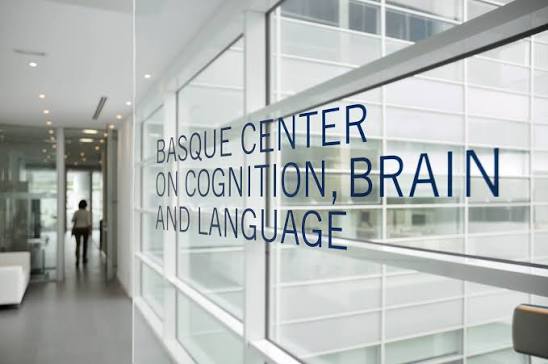
The Basque Center on Cognition, Brain and Language is an international, interdisciplinary research centre based in San Sebastián. It studies cognition, the brain and language, with particular emphasis on bilingualism and multilingualism. BCBL was founded by Ikerbasque, Innobasque, the University of the Basque Country (UPV/EHU) and the Provincial Council of Gipuzkoa.