
Saltar al contenido
Basque Science logo
Menú
  • Home
  • About basque.SCIENCE
  • who`s who
  • Send us your proposals
Menú

EHU research highlights the need for a sustainable global green hydrogen supply chain

Publicada el octubre 9, 2026 por Jon Erramun Arrue-Karazo

A study conducted by the EHU-University of the Basque Country highlights that achieving a sustainable green hydrogen economy will require both technological advances and policies that balance environmental protection, economic competitiveness and social responsibility

Edited by Jon Erramun Arrue-Karazo

A research group at the University of the Basque Country (EHU) has assessed the environmental, economic and social sustainability of international green hydrogen supply chains, highlighting the need to balance economic competitiveness with environmental protection and social responsibility.

The EHU’s SUPREN research group is leading the European project UnLOHCked, which explores the challenges of transporting and storing green hydrogen. One promising solution involves liquid organic hydrogen carriers (LOHCs), which enable hydrogen to be stored in organic liquids and transported using existing oil and gas infrastructure.

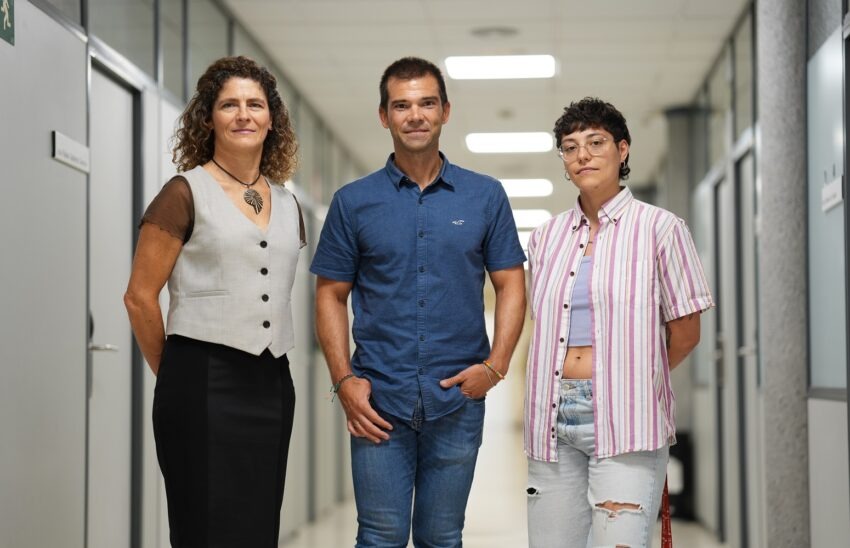
The study, conducted by researcher Irene Rey under the supervision of Professor Ion Agirre and Professor Victoria Laura Barrio, analyses different international supply chains connecting renewable energy-producing countries, such as Namibia, Saudi Arabia, Norway and Spain, with consumer markets including Germany, the Netherlands, Japan and Italy. It also incorporates a social risk assessment, an aspect that has received comparatively little attention in previous research.

The findings identify hydrogen production and its subsequent release from the carrier liquid as the most critical stages, owing to their high energy requirements. The researchers also conclude that no single supply chain configuration delivers optimal results across all three dimensions: environmental, economic and social sustainability.

The study highlights the importance of considering geopolitical and social implications when developing future green hydrogen trade routes, particularly to avoid reproducing inequalities between resource-exporting countries in the Global South and industrialised economies in the Global North.

The research provides valuable insights for the design of future international green hydrogen corridors, emphasising that technological innovation must be accompanied by policies that ensure environmental benefits, economic viability and social equity.

More here.

CIC ENERGIGUNE
José Ignacio Zudaire
Olena Kyzyma
Aurelio Mateo Alonso
UPV,almacenamiento,energia,sistema,ecologico,económico
Pilar,investigadora,ADN
Mikel Duran
Aitor Viribay Morales
Garazi López de Aguileta
Irene de la Cruz Pavia - LapLab - Ikerbasque
Natalia Andrea Romero. GIIDEBA
Basque Science Woman Women STEM STEAM
GLUTLEARN,Educación nutriciónal, celiaca
Dorleta Jimenez de Aberasturi
Ander Caballero. Juan Ignacio Pérez Iglesias. BasQ Quantum System Two
Basque Science Woman Women STEM STEAM
Ildefonso Martínez de la Fuente, EHU-UPV
Raquel Esteban Terradillos y Daniel Marino Bilbao
Santa Águeda
Itziar Lopez Cortajarena Kortajarena
Nuria Gisbert. CIC Energigune
Nuria Gisbert / CIC Energigune
Rebeca Díez Alarcia

Last News

  • EHU research highlights the need for a sustainable global green hydrogen supply chain
  • Investing in the Face of Climate Change?
  • Dyslexia and Reading Research World Leading Experts in Donostia
  • International Polyamines Conference in University of Deusto: a step forward in the internationalisation of local biomedicine
  • European scientists propose EU innovation reforms in Science
  • EHU’s Renewable Energy and Green Hydrogen Lab: Powering a More Efficient, Reliable and Cost‑Competitive Future
  • CIC ENERGIGUNE marks fifteen years of turning scientific excellence into technology and impact for the basque country
  • New treatment target found for highly aggressive primary liver cancer
  • BIOSPAIN 2026 positions Bilbao as the European capital for biotechnology
  • July 22 marks World Brain Day
  • The Basque Country, one of the Leading Quantum Ecosystems on the International Map
  • CIC energigune drives the development of smart textiles capable of managing temperature and energy
  • LUP: Artificial Intelligence and Computer Vision for Accessible Reading
  • Onkoreplica: We seek to accelerate the development of more effective therapies and improve cancer patients’ access to treatment
  • Ylenia Jabalera and Ujué Fresán awarded the 2026 L’Oréal–UNESCO ‘For Women in Science’ prizes
  • The power of the sea drives an innovative project on the Basque coast: Carnegie commitment to clean energy
  • Cyber ​​Surgery aims to introduce its spinal surgery robot in the United States
  • Universal Omics: “It’s time to use AI to research and treat metabolic diseases”
  • Oroi Boosts Growth in Central Europe with Acquisition of Kaleido VR
  • Glycoscience develops long-lasting natural repellents and sustainable biopesticides from the Basque Country
  • The first global tool to promote equality in ocean management is launched
  • Aleovitro, Basque Biotechnology for In Vitro Plant Cultivation
  • ‘Emakumeak Zientzian’ celebrates its tenth edition with a Manifesto for the Science of the Future
  • Basque Country Showcases Quantum Strategy to 14 European Regions at Innovation Leaders Meeting
  • Women in Science in the Basque Country: A Decade of Weaving Networks​
  • A pioneering genetic catalogue reveals hidden biodiversity in Basque estuary sediments
  • A mechanism that aggravates metabolic fatty liver disease discovered
  • Basque Country strengthens its position as a European hub for biosanitary innovation, neuroscience, and health technologies after two major achievements
  • University of Deusto to build its first academic satellite in partnership with Satlantis Microsats
  • Basque Government and IBM inaugurate the first ‘Quantum System Two’ in Europe, located in Donostia
  • Aurelio Mateo Alonso appointed Corresponding Academician of the Royal Academy of Sciences
  • Supercomputing in Industry and its importance
  • Deusto researchers develop a guide to help companies measure their social value and impact
  • Bilbao: IDOM announces its Science Factory
  • Basquevolt Chosen by the European Commission’s EIC Accelerator to Drive Solid-State Electrolyte Innovation and Production ‘Made in Basque Country’ for Europe
  • How the Basque Country Is shaping the observatory will change the understanding of the universe
  • Amalur EIS: A New Platform for Evaluating Industrial Emissions Across Europe
  • New advances in the search for new medications
  • MINDSENS: Early Alzheimer’s detection with a drop of blood
  • EHU: Heart disease, cancer or Parkinson’s risk development could be found through saliva analysis
  • Clean Hydrogen Generation from Seawater
  • Neuron-like cells made from human dental stem cells
  • GLUTLEARN, an educational programme for people following a gluten-free diet
  • European cities are lagging behind in adapting to climate change.
  • LAPlab: Deciphering the secrets of language
  • MEPRO Medical Reproductive Solutions, technology with purpose: innovating in male fertility
  • The Basque Country will install the first ‘IBM Quantum System Two’ in Europe, in Donostia – San Sebastián
  • An environmentally friendly and economical high-power energy storage system from pine biomass
  • The fascinating invention to detect dark matter in Jupiter’s interior
  • Pilar Nicolás, researcher at the UPV/EHU, participates in the creation of the largest European DNA catalogue

Encuéntranos

Dirección
Plaza de la Convivencia
Bilbao, 48001
BASQUE COUNTRY

info@basque.science

  • octubre 9, 2026 by Jon Erramun Arrue-Karazo EHU research highlights the need for a sustainable global green hydrogen supply chain
  • octubre 7, 2026 by Jon Erramun Arrue-Karazo Investing in the Face of Climate Change?
  • octubre 6, 2026 by Jon Erramun Arrue-Karazo Dyslexia and Reading Research World Leading Experts in Donostia
  • octubre 2, 2026 by Jon Erramun Arrue-Karazo International Polyamines Conference in University of Deusto: a step forward in the internationalisation of local biomedicine
  • septiembre 28, 2026 by BasqueScience European scientists propose EU innovation reforms in Science

SCIENCE

The scientific production in the Basque Country is very relevant. The educational and university environment, the business world, entities and institutions make up an important ecosystem here that is committed to the future.

TECHNOLOGY

Technologies and good methodologies facilitate a greater and better advancement of Science. Science and Technology come together to improve the quality of life of People, to build a better society..

INNOVATION

The Basque institutional strategies for Science, Technology and Innovation work to position our region among the most advanced European regions in innovation, with an excellent Human Development Index.