
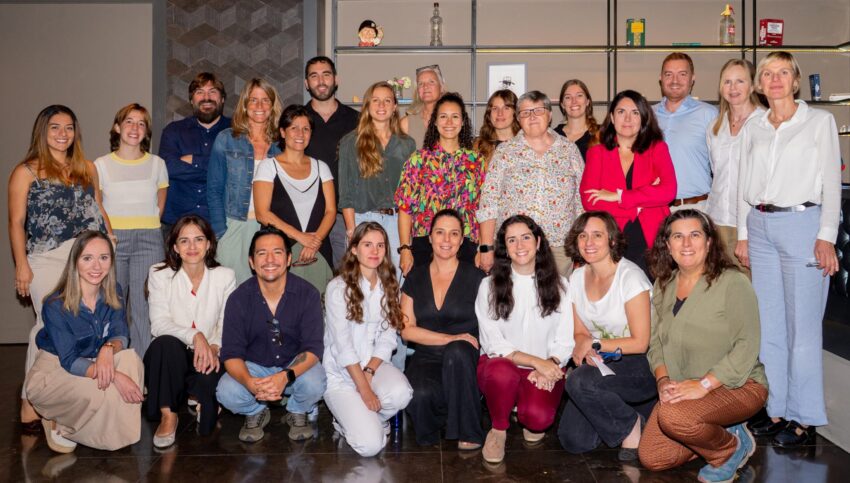
A European project, led by BC3, seeks to turn climate resilience into a business opportunity.
Source: Mundo Empresarial Edited by Jon Erramun Arrue-Karazo
The UN Environment Programme (UNEP) forecasts a global annual financing gap of up to USD 359 billion between current funding—predominantly public—and the capital required to address the challenges posed by the climate crisis. Over the 2021–2022 period, for example, only around 2% came from private investment sources.
However, climate impacts extend beyond the public sphere: businesses, households, and public health and safety are increasingly exposed to heightened risk.
In this context, a European project (CAESAR), coordinated by the climate change research centre Basque Centre for Climate Change (BC3), will over the next three years generate scientific evidence to help frame climate resilience and adaptation as an investment opportunity for companies.
To this end, the partners involved in the initiative will explore, through nine real-world case studies—three of them in Spain (Granada, Benidorm, and the Júcar River)—new approaches and mechanisms to mobilize private finance to tackle climate challenges such as water management, critical infrastructure, health and well-being, land use, food systems, and ecosystems.
«The challenge lies not only in the lack of capital, but in how to quantify, capture, or translate benefits and risks into clear investment proposals. Many adaptation measures already generate significant economic and social value, but this value is not always evident to investors«, explains María José Sanz, Scientific Director at BC3.
Granada, Benidorm, and the Mediterranean basins
Meanwhile, in Benidorm, the focus will be on achieving a resilient water supply in a Mediterranean city where seasonal demand is placing growing pressure on limited water resources.
The final Spanish case study is located in the Mediterranean basins. In this setting, the project will explore how nature-based solutions can strengthen resilience to droughts, floods, and wildfires, while developing financing models capable of attracting greater private-sector participation.
Other practical case studies will be located in Ukraine, Switzerland, and Norway. In all of them, a multidimensional approach will be adopted to develop and test methodologies that assess the value of adaptation, identify barriers to private investment, and explore innovative financing mechanisms, with a view to producing practical recommendations for policymakers, municipalities, and financial actors.
Building on these findings, the project aims to develop a Private Finance Framework for Adaptation, with the objective of positioning climate resilience as an investment opportunity rather than a cost to be funded.
The role of communication
This initiative will also examine a less visible barrier to private investment: the way climate adaptation is communicated. This line of work will investigate how different narratives and informational approaches influence the way private-sector actors perceive climate risk, adaptation, and investment opportunities.
The work will begin with research into how private-sector stakeholders currently perceive climate adaptation, what factors shape their decisions, and where current approaches fail to capture their interest. These findings will underpin an experimental methodology in which diverse narratives and messages will be tested across the case studies, with results evaluated according to the responses of the actors involved.
«The aim is not only to identify what is persuasive, but to determine what truly helps decision-makers understand the value of adaptation«, concludes Sanz.
Funded by the EU Mission on Adaptation to Climate Change, the CAESAR initiative («Climate Adaptation and Economic Solutions for Adaptive Resilience») brings together 21 partners from six countries, including research entities, public institutions, and private companies.