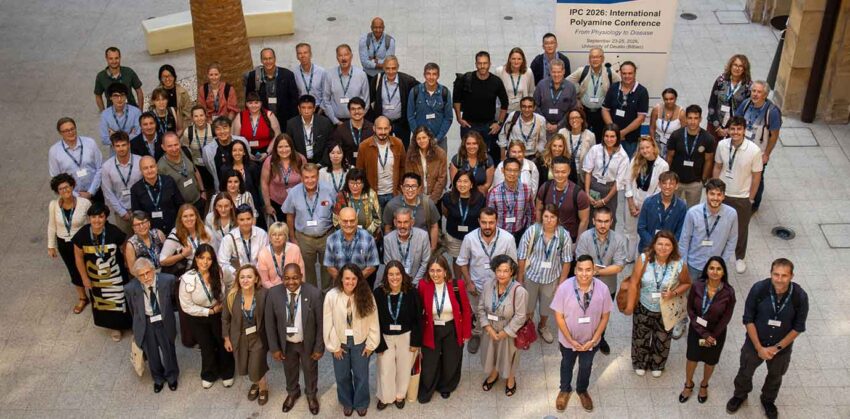
More than 90 experts from 18 countries and 33 speakers from 11 different nationalities have examined the role of these compounds in health, ageing and diseases such as cancer in University of Deusto (Bilbao).
Source: University of Deusto. Edited by Jon Erramun Arrue-Karazo.
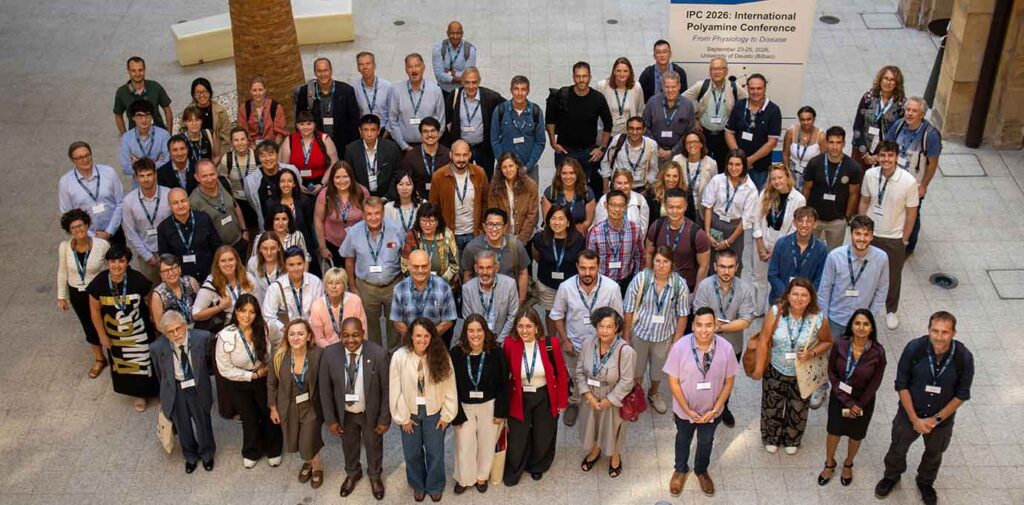
The International Polyamine Conference: From Physiology to Disease, which took place from 23 to 25 September, has turned Bilbao and the University of Deusto into the centre of the international biomedical community. The fact that this prestigious biennial conference – a world-leading event in the study of polyamines in the field of nutrition and health – is being held in Bilbao for the first time represents a milestone of great international significance, consolidating the firm commitment of the Centre for Cooperative Research in Biosciences (CICbioGUNE) and its internationalisation strategy to attract the best talent and cutting-edge global research to the region.
The initiative demonstrates the impact of local research on high-level scientific collaboration networks, directly aligned with the PreMetaCan programme (Precision Metabolism for Next-Generation Cancer Management) in precision oncology, funded by the Scientific Foundation of the Spanish Association Against Cancer (AECC). Thanks to this momentum, the event has attracted a total of 90 attendees from 18 countries, establishing itself as a leading multidisciplinary forum. Over the course of the three-day conference, 33 speakers from 11 different countries (the United States, Germany, Singapore, Belgium, Spain, Italy, Poland, Japan, France, China and Switzerland) are examining the molecular and cellular mechanisms of polyamines in the body.
The impact of polyamines on ageing and their direct link to serious conditions such as neurodegenerative diseases and cancer received specific emphasis in the programme. In this context, participation in and promotion of projects such as the PreMetaCan programme have taken on particular significance, linking directly to the thematic sessions focused on clinical trials of combination therapies, biosynthesis inhibitors and polyamine uptake inhibitors for advanced cancer treatment. The conference also explores cellular physiology, metabolism under hypoxic conditions and the relationship with the microbiome.
Read the full article here.