
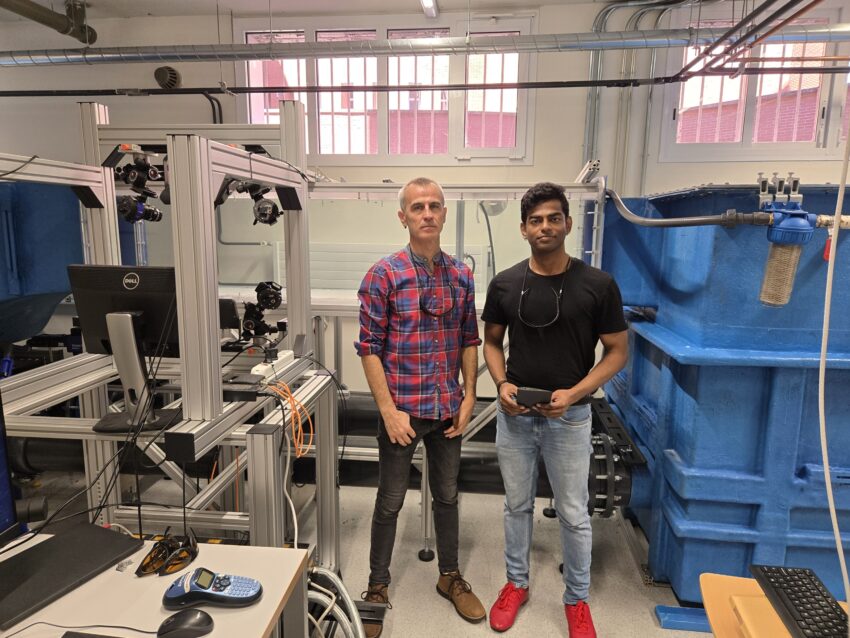
The Renewable Energy and Green Hydrogen Laboratory (ERHV.lab) at the University of the Basque Country (EHU) is pushing the frontiers of clean energy research to make renewable generation and green hydrogen production more efficient, reliable and economically competitive.
Based at the School of Engineering in Vitoria‑Gasteiz, ERHV.lab focuses on developing renewable energy systems and studying how they can be used to produce green hydrogen at scale. Its work targets one of the hardest challenges of the energy transition: decarbonising heavy industry, storing surplus renewable electricity and replacing fossil feedstocks in applications where direct electrification falls short.
The laboratory is partially funded by the Centre for Energy, Environmental and Technological Research (CIEMAT) and brings together researchers from multiple UPV/EHU departments.
Team and mission
The lab is led by director Unai Fernández Gámiz and currently includes 12 UPV/EHU professors and 14 PhD students, plus additional master’s and bachelor’s students working on final projects. Their mission spans four core lines:
- Optimising offshore wind and solar PV technologies for higher efficiency under real operating conditions.
- Researching green hydrogen production from renewables to cut costs and improve competitiveness.
- Developing models, simulations and AI algorithms to enhance the design, control and performance of energy systems.
- Investigating energy storage solutions, such as redox flow batteries, and their integration with renewables.
In short, the lab aims to ensure that renewable power and green hydrogen become technically robust and financially viable at industrial scale.
Recent projects and breakthroughs
A recent highlight is the HIDRURA project, coordinated by Tecnalia and funded under SPRI Group’s Elkartek programme in 2024, which ended on 31 December 2025. HIDRURA explored three technological pathways to produce cheaper, more efficient and more sustainable green hydrogen: seawater electrolysis, decoupled electrolysis and biogas‑based routes. The goal was to develop components, models and prototypes that could prove industrial competitiveness.
On the modelling side, ERHV.lab has built a Computational Fluid Dynamics (CFD) model that replicates the operation of an alkaline electrolyser cell. This tool is designed to accelerate the optimisation of hydrogen production systems powered by renewables and is currently in the validation phase.
The lab is also involved in the SINTETIK project, funded by Elkartek 2025, which targets new technologies for renewable synthetic fuels (e‑fuels) and more efficient, lower‑emission hydrogen production from ammonia.
Why green hydrogen matters for Basque industry
For Basque industry, green hydrogen is not just an energy vector but a lever for competitiveness and industrial transformation. Sectors such as steelmaking, chemicals, refining, glass, cement and paper are energy‑intensive and, in many cases, difficult to electrify directly. Green hydrogen can progressively replace coal, natural gas and fossil‑based hydrogen in high‑temperature processes and as a chemical feedstock, while also enabling the production of synthetic fuels.
For society, it offers potential benefits including reduced dependence on imported fossil fuels, improved energy security and lower pollution from heavy industry and freight transport. However, the lab stresses that hydrogen is not a universal solution: electrolysis is electricity‑ and water‑intensive and entails energy losses across production, storage and use, underscoring the need for continued R&D.
Collaboration and next steps
ERHV.lab works closely with Basque research centres and technology organisations, as well as European and international universities and research groups. This network supports multidisciplinary projects, knowledge sharing and the co‑development of new energy technologies.
Positioned at the early stages of the technology development chain, the laboratory generates scientific knowledge and explores new concepts that will underpin future decarbonisation, electrification and energy system transformation in the Basque Country and beyond.
+info HERE
